

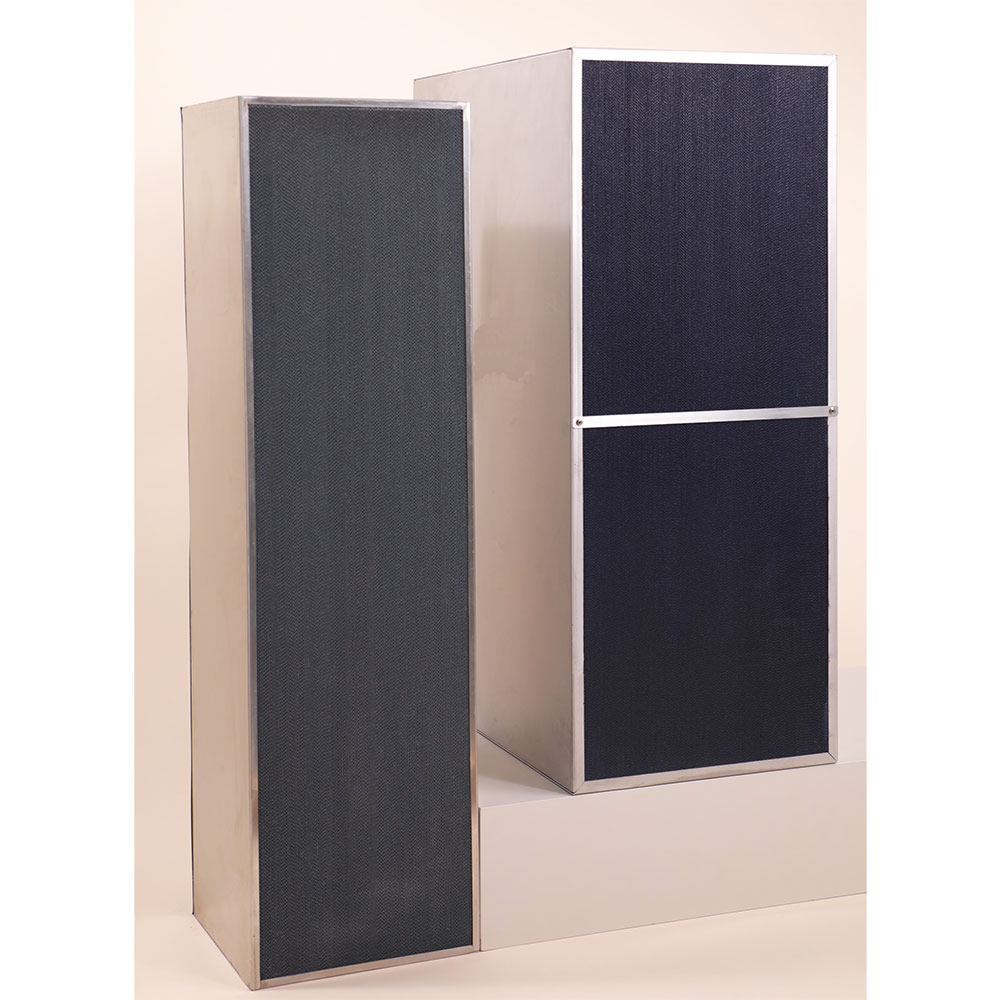
Zeolite Block for VOCs Organic Exhaust Gas Treatment Equipment
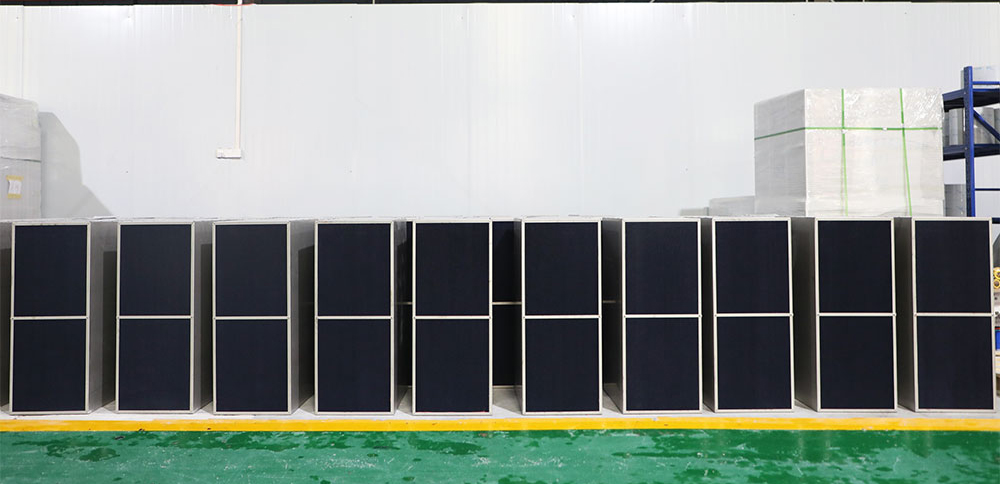
Zeolites are a general term for crystalline silicoaluminates, with the chemical formula Ax/n(SiO2)(AlO2)x·m·H2O (where A is a cation with a valence of n). In zeolites,
silicon dioxide and aluminum oxide are connected in a highly regular manner, forming uniform micropores. Due to their ability to adsorb target substances with
considerable precision, zeolites exhibit strong selective adsorption properties
Ideal Adsorption Material
1. High Adsorption Capacity and Efficiency
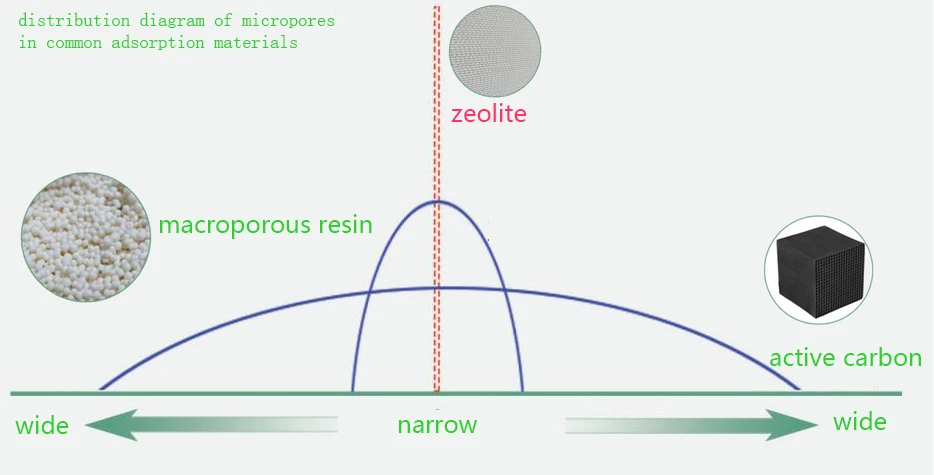
Zeolite crystal structures contain internal voids and channels, with the pore volume accounting for over 50% of the total zeolite crystal volume. The
micropores of zeolite are uniformly distributed and have small diameters, making them well-suited for adsorbing target molecules of similar size, resulting
in exceptionally high adsorption efficiency. The internal surface area of zeolite crystals is significantly larger than that of common adsorbents such as activated
carbon or silica gel. While activated carbon or silica gel typically has only a few square meters of internal surface area per gram, zeolite can achieve over a
thousand square meters per gram. For instance, 3 grams of zeolite molecular sieve possess an adsorption area equivalent to over 3,000 square meters—
a football field, thus exhibiting an extraordinarily high adsorption capacity.
2. Strong Selectivity and High Hydrophobicity
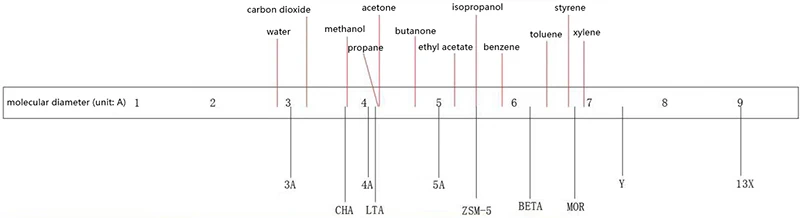
Zeolites have strong selective adsorption and hydrophobicity. The voids and channels inside zeolite crystals are uniform and fixed in size, with pore diameters
ranging from 4A to 8A. Only molecules with smaller diameters can enter the pores and be adsorbed, while larger molecules cannot enter the pores. Due to this
selective adsorption performance, zeolites are also known as molecular sieves.
3. Strong Thermal Stability and High Regeneration Efficiency
The main component of zeolite is inorganic salts, which can maintain the stability of its crystal structure under high temperature conditions from 600 ° C to 1000 ° C.
In VOCs treatment, high-temperature gas desorption of target pollutants at temperatures greater than or equal to 300 ° C can be used to quickly and thoroughly
regenerate zeolite molecular sieves. Additionally, zeolite molecular sieves are non-combustible substances with high safety.
Modified Zeolite Molecular Sieve
Design customization for each situation
Hydrophobic, Low Specific Heat, High-Temperature-Resistant Substrate Framework
Using a new type of nanocomposite pressing technology, special glass fiber material is compounded and formed into a corrugated fiber substrate, serving as the
basic framework for the zeolite rotor, thereby giving the substrate more specific surface area, allowing the zeolite molecular sieve to adhere evenly on the surface.
By adjusting the physical and chemical properties such as glass fiber length, density and hardness, the substrate framework achieves strong hydrophobicity and
very low specific heat, meeting the basic requirements for 'rapid desorption'.
Selective Adsorption, Low Catalytic Activity and Strong Adsorption – High-Silica Zeolite Molecular Sieves
Zeolites are crystalline compounds of silicon dioxide and aluminium oxide. By controlling the ratio of silicon dioxide to aluminium oxide, even the same crystalline
structure can result in different functions and properties of the zeolite. Our company manufactures different types of modified products tailored to user requirements
by altering the zeolite's hydrophilicity, heat resistance and catalytic properties (acid strength and acid quantity), achieving high functionality of zeolite molecular sieves.
Ionic Regulation Technology and Composite Formulation
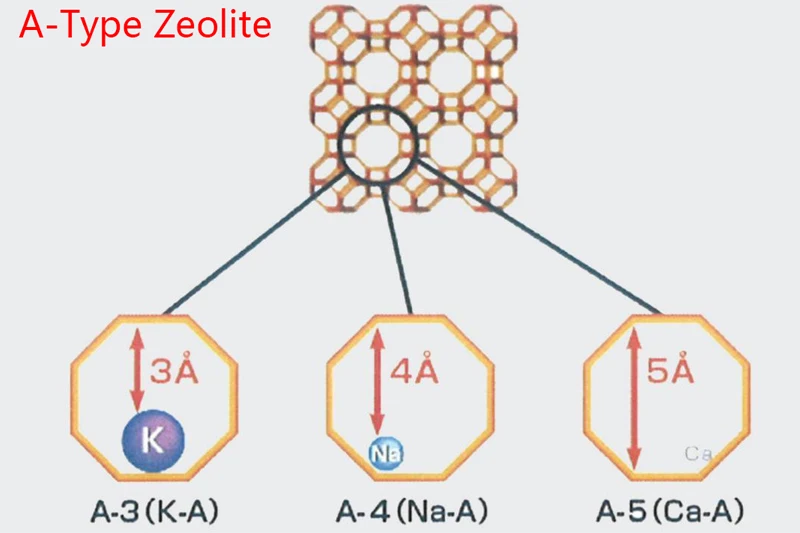
There are cations (potassium, sodium, calcium, etc.) in the crystalline structure of zeolite
Our zeolite is designed to adsorb target substances. By exchanging cations, the size of the micropores can be freely changed, allowing for more accurate selection
of adsorption techniques for target substances.Based on the actual working conditions and target substances provided by the customer, as well as their proportions,
customized composite formulations for those conditions are developed through experimental simulation tests.
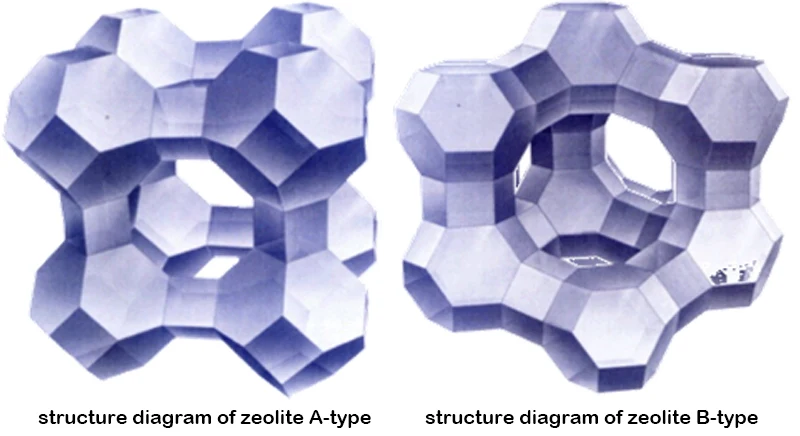
Ionic Regulation (Type A zeolite as an example)
Customized Compound Formulation


Four Steps to Customize Zeolite Modules
First. Identify the source points of exhaust gas and airflow
Provide basic information on the exhaust gas generation point, industry, production cycle, operating
rules, and accurate operating air volume, based on the actual instantaneous maximum value during
operation.
Second, Determine composition and proportion of exhaust gas.
Zeolite molecular sieves have very strong selective adsorption, so providing more accurate exhaust
gas composition and proportion, customized zeolite molecular sieves are more targeted, with higher
adsorption efficiency and capacity.
Third, Determine the inlet concentration and outlet requirements.
Determine the VOCs concentration at the inlet of exhaust gas under actual operating conditions, based
on the instantaneous maximum value of full load production, which can be monitored using portable FID
or FDI; To determine the outlet requirements for zeolite molecular sieve adsorption, it is necessary to
consider the purification efficiency of the thermal oxidation section and the emission concentration of the
mixed gas from the chimney based on the actual situation.
Four, Exclusive Customization
Based on the information provided by the customer, the state conducts experimental simulations (on-site
actual testing is necessary if necessary) by analyzing the boiling point, saturated vapor pressure, polar
molecular dynamics diameter and other characteristics of the exhaust gas components, and comprehensively
designs exclusive corrugated zeolite molecular sieve adsorption materials.