

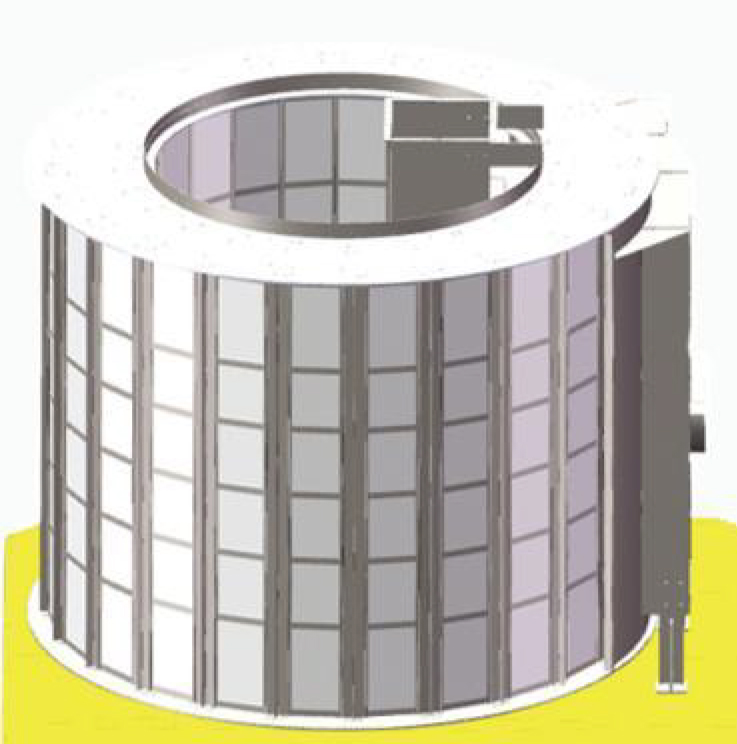
Zeolite Drum for Large Volume Environmental Protection Equipment for Removing Various VOC Gas Mixtures
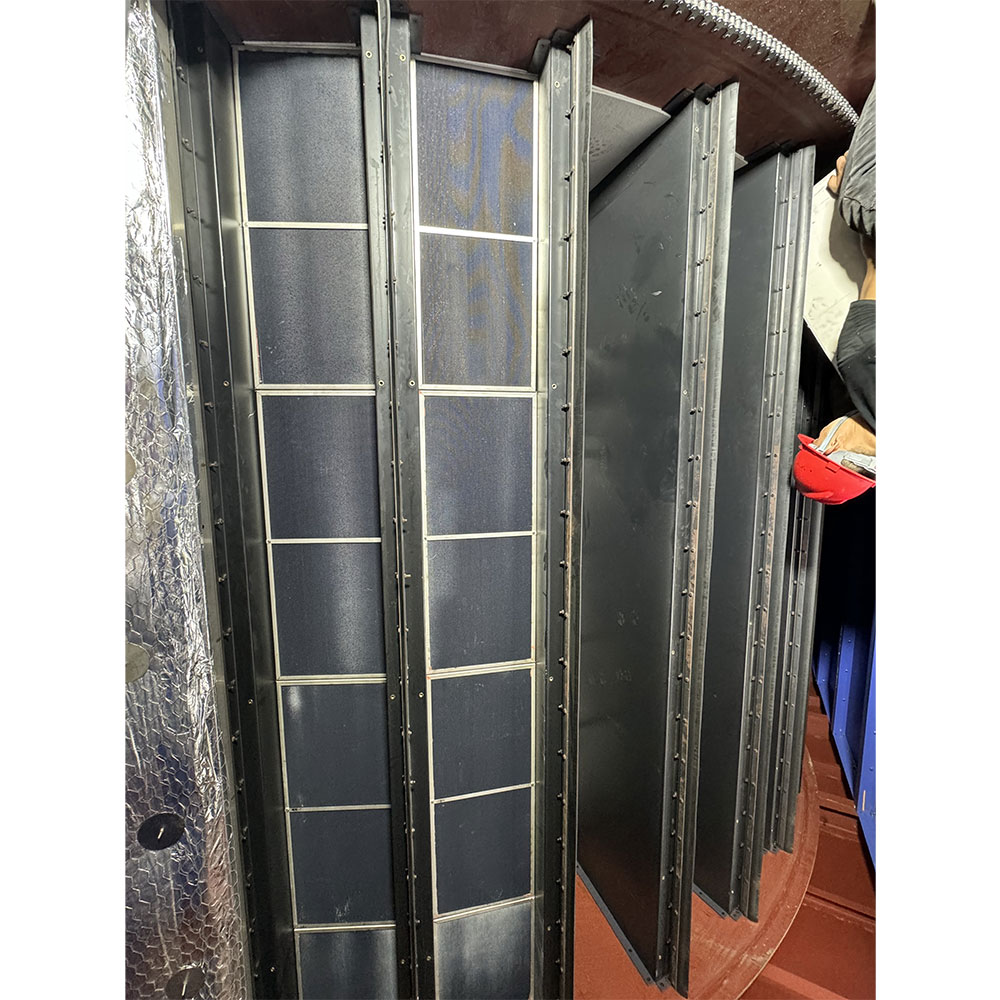
Modified Zeolite Molecular Sieve
Design customization for each situation
Hydrophobic, Low Specific Heat, High-Temperature-Resistant Substrate Framework
Using a new type of nanocomposite pressing technology, special glass fiber material is compounded and formed into a corrugated fiber substrate,
serving as the basic framework for the zeolite rotor, thereby giving the substrate more specific surface area, allowing the zeolite molecular sieve to
adhere evenly on the surface. By adjusting the physical and chemical properties such as glass fiber length, density and hardness, the substrate
framework achieves strong hydrophobicity and very low specific heat, meeting the basic requirements for 'rapid desorption'.
Selective Adsorption, Low Catalytic Activity and Strong Adsorption – High-Silica Zeolite Molecular Sieves
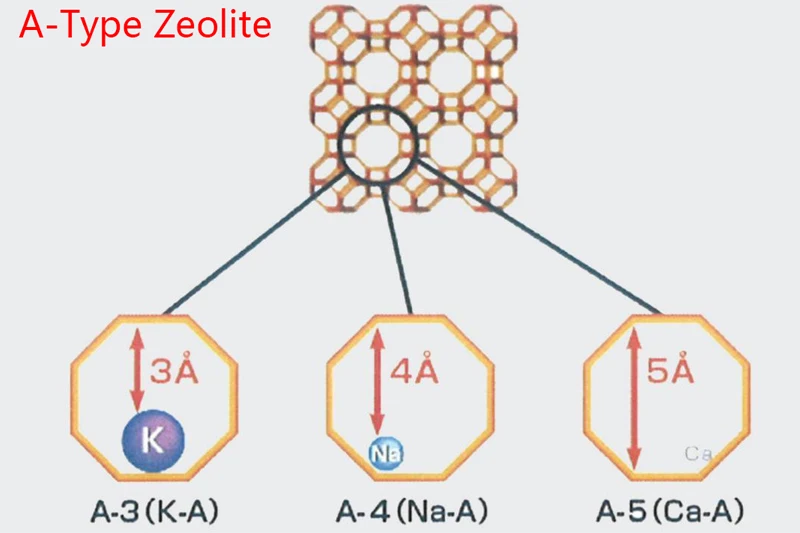
Zeolites are crystalline compounds of silicon dioxide and aluminium oxide. By controlling the ratio of silicon dioxide to aluminium oxide, even the
same crystalline structure can result in different functions and properties of the zeolite. Our company manufactures different types of modified
products tailored to user requirements by altering the zeolite's hydrophilicity, heat resistance and catalytic properties (acid strength and acid quantity),
achieving high functionality of zeolite molecular sieves.
Ionic Regulation Technology and Composite Formulation
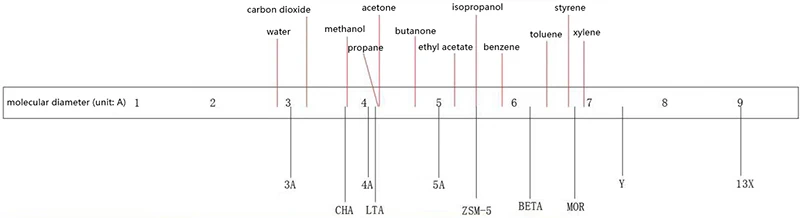
There are cations (potassium, sodium, calcium, etc.) in the crystalline structure of zeolite
Our zeolite is designed to adsorb target substances. By exchanging cations, the size of the micropores can be freely changed, allowing for more accurate
selection of adsorption techniques for target substances.Based on the actual working conditions and target substances provided by the customer, as well
as their proportions, customized composite formulations for those conditions are developed through experimental simulation tests.
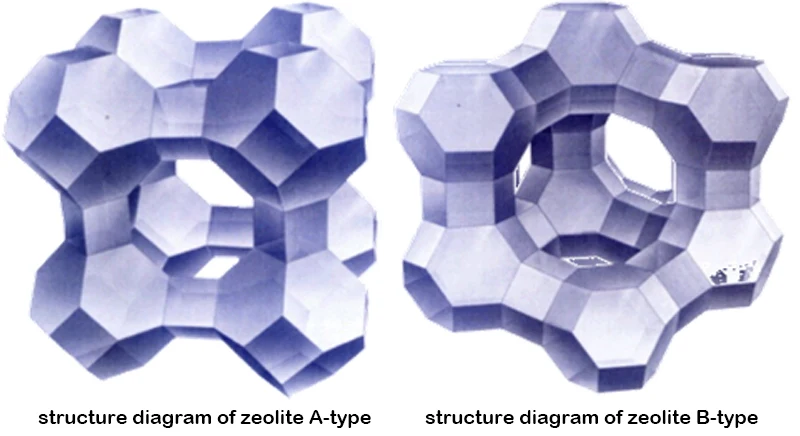
Ionic Regulation (Type A zeolite as an example)
Customized Compound Formulation
Process Route of Zeolite Wheel and Zeolite Drum
| zeolite wheel | zeolite drum | |
| airflow | VOC gas volume ≤150000NM3/H | VOCs gas volume>150000NM3/H |
| concentration | inlet VOC gas concentration≤300mg/m3 | inlet VOC gas concentration>300mg/m3 |
| high-boiling substance | no high-boiling-point substances | containing high-boiling-point substances |
| boiling point of exhaust gas components≤220℃ | boiling point of exhaust gas components>220℃ | |
| Applicable Industry | furniture industry | pharmaceutical industry |
| automotive industry | gravure printing industry | |
| plastic industry | aluminum processing industry | |
| toy industry | artificial stone industry | |
| hardware industry | chemical industry | |
| semiconductor industry | fiberglass products industry | |
| electronics industry | paint and coating industry |
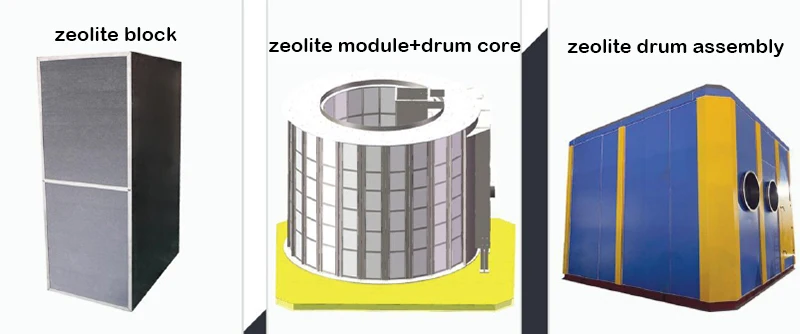
Zeolite drum is specially designed for processing high concentration mixed VOC gases with a volume
of 50000~260000 cubic meters per hour. It is an environmentally friendly equipment customized


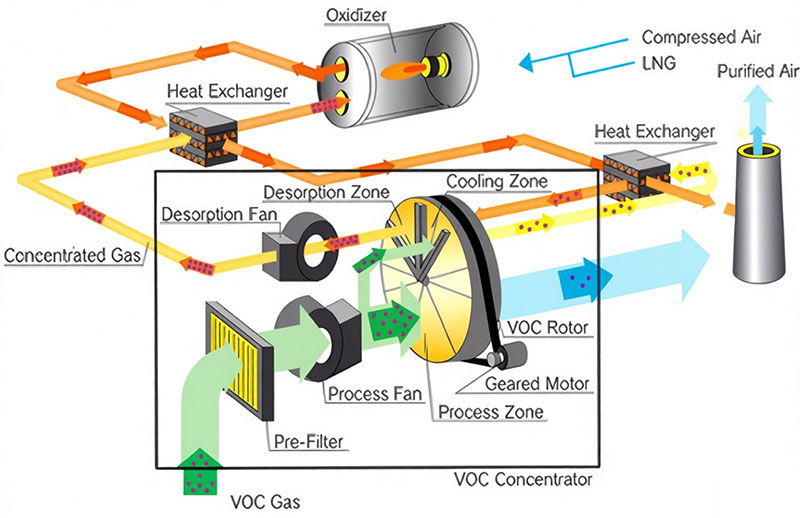
working principle of zeolite drum is same as that of zeolite wheel
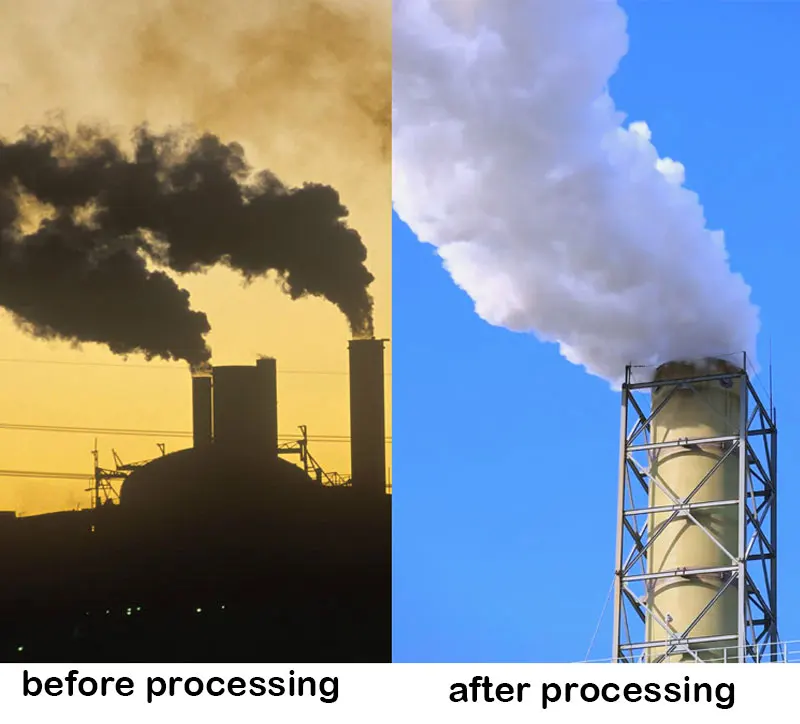
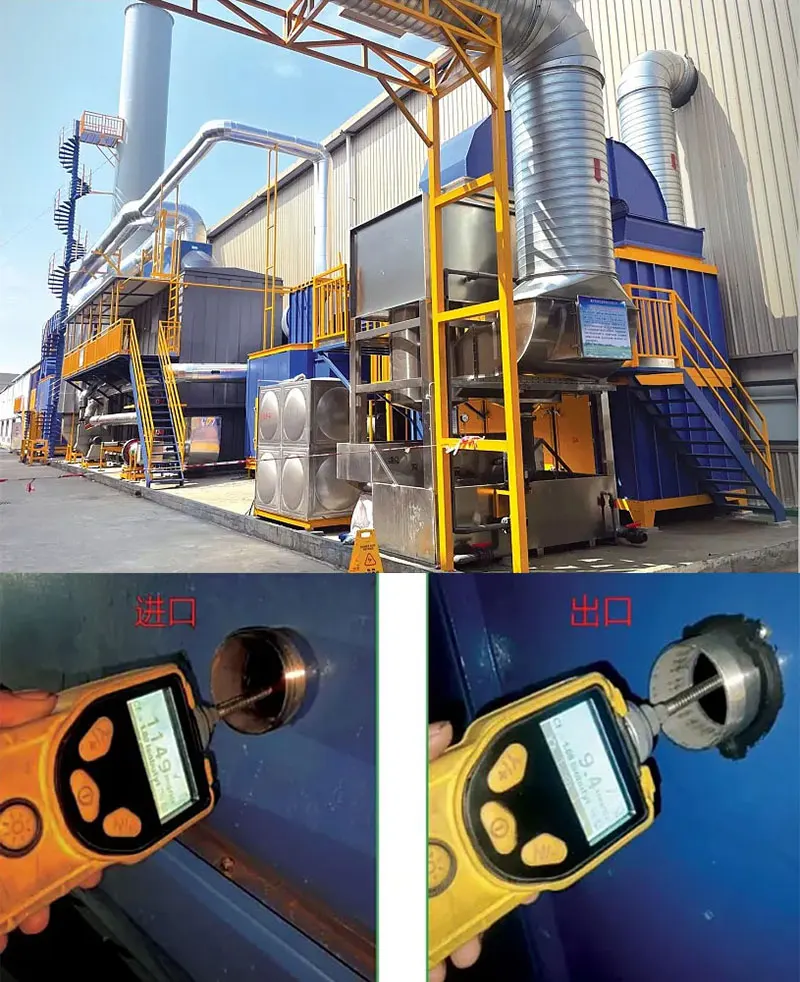
Case Study: XXX Aluminum Factory Co., Ltd
Processing VOCs gas volume of 310000 m3/h, designed VOC import concentration: 1500mg/m3, outlet concentration less than 20mg/m3
Four Steps to Customize Zeolite Modules
First. Identify the source points of exhaust gas and airflow
Provide basic information on the exhaust gas generation point, industry, production cycle, operating
rules, and accurate operating air volume, based on the actual instantaneous maximum value during
operation.
Second, Determine composition and proportion of exhaust gas.
Zeolite molecular sieves have very strong selective adsorption, so providing more accurate exhaust
gas composition and proportion, customized zeolite molecular sieves are more targeted, with higher
adsorption efficiency and capacity.
Third, Determine the inlet concentration and outlet requirements.
Determine the VOCs concentration at the inlet of exhaust gas under actual operating conditions, based
on the instantaneous maximum value of full load production, which can be monitored using portable FID
or FDI; To determine the outlet requirements for zeolite molecular sieve adsorption, it is necessary to
consider the purification efficiency of the thermal oxidation section and the emission concentration of the
mixed gas from the chimney based on the actual situation.
Four, Exclusive Customization
Based on the information provided by the customer, the state conducts experimental simulations (on-site
actual testing is necessary if necessary) by analyzing the boiling point, saturated vapor pressure, polar
molecular dynamics diameter and other characteristics of the exhaust gas components, and comprehensively
designs exclusive corrugated zeolite molecular sieve adsorption materials.